Why Anal Gland Soft Chews Are Exploding in the USA Pet Supplement Market
Learn why anal gland soft chews are growing in the USA pet supplement market and how brands can develop fiber, probiotic, and digestive support formulas.
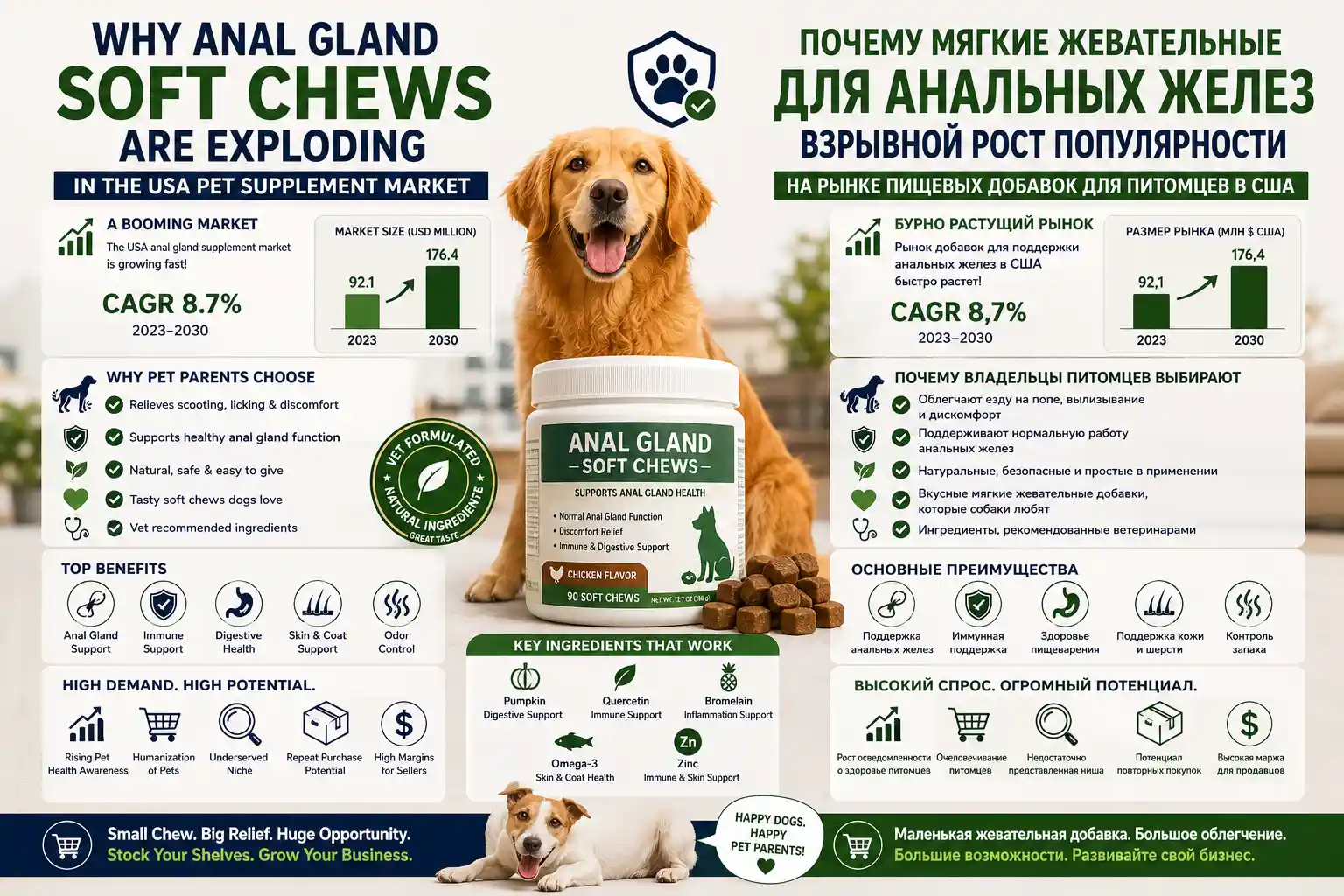
Anal gland soft chews have moved from a niche dog-care product into one of the more visible functional formats in the USA pet supplement market. The reason is not complicated: dog owners are searching for easier daily solutions that support stool quality, digestive balance, and normal anal gland function without turning every routine into a struggle. For pet supplement brands, this creates a practical product opportunity with strong consumer awareness and clear repeat-purchase potential.
The broader category gives this trend a solid base. Grand View Research estimated the global pet supplements market at about USD 2.76 billion in 2025 and projected it to reach USD 4.65 billion by 2033, with a CAGR of 6.9% from 2026 to 2033. Within that growth, digestive health, fiber-based formulas, and soft chew delivery formats are becoming especially attractive for dog supplement brands.
Why Anal Gland Support Has Become a Mainstream Dog Supplement Need
Anal gland concerns are common enough that many dog owners recognize the signs, even if they do not understand the full biology. Scooting, odor, licking, and discomfort-related behavior often push owners to search for daily support products. A supplement cannot replace veterinary care when a dog has a medical condition, but it can be positioned to support digestive health, stool consistency, and normal gland expression.
This matters for brands because the consumer problem is easy to understand. Unlike highly technical supplement categories, anal gland support connects directly with visible pet-owner frustration. That makes the product easier to explain on Amazon, Shopify, Chewy-style marketplaces, veterinary retail shelves, and social media content.
What Makes Soft Chews So Attractive for USA Pet Supplement Buyers
Soft chews fit the USA dog supplement market because they look familiar, feel treat-like, and support daily compliance. Many dog owners do not want powders that must be measured or capsules that need to be hidden in food. A soft chew can be given as part of a daily routine, making it easier to maintain repeat use.
For brands, soft chews also offer strong commercial advantages. They provide room for flavor design, shape customization, premium packaging, and clear dosage instructions by dog weight. A good soft chew can sit between supplement and treat, which is useful for consumer education and subscription-based sales.
Key Ingredients Used in Anal Gland Soft Chew Formulas
Most anal gland soft chew formulas are built around digestive and fiber support. Common ingredients include pumpkin powder, psyllium husk, beet pulp, apple fiber, flaxseed, probiotics, prebiotics, digestive enzymes, and selected botanical extracts. Some formulas also add omega fatty acids, zinc, or antioxidants for broader skin, coat, and wellness positioning.
The key is balance. Too much fiber may affect palatability or stool consistency, while poorly selected fiber sources may not deliver the texture and digestive support consumers expect. Probiotics and enzymes require careful processing and stability review, especially if the soft chew formula involves heat or higher moisture.
How Digestive Health, Fiber, and Stool Quality Drive Product Demand
The commercial logic behind anal gland soft chews is closely tied to stool quality. When stools are properly formed, they may help support normal gland expression during bowel movements. That is why fiber, digestive balance, and gut support are central to the category.
This creates a strong content angle for brands. Instead of making risky treatment claims, brands can educate consumers on daily digestive support, fiber variety, hydration, stool formation, and when to consult a veterinarian. This approach is safer, more credible, and better aligned with Google content quality expectations.
What USA Brands Should Check Before Developing Anal Gland Soft Chews
Before launching anal gland soft chews, USA brands should evaluate formula purpose, ingredient compatibility, serving size, flavor masking, chew texture, and shelf-life stability. A formula may look strong on paper but fail if dogs reject the taste or if active ingredients degrade during storage.
Buyers should also ask manufacturers about production capability, blending uniformity, moisture control, microbial testing, and packaging options. For private label projects, it is useful to compare standard formulas with custom formulas based on target price, MOQ, and market positioning.
Packaging, Claims, Palatability, and Compliance Considerations
Anal gland products require careful claim language. Safer wording includes “supports normal anal gland function,” “supports digestive health,” “helps maintain stool quality,” and “daily fiber support.” Brands should avoid language that suggests curing infections, treating impacted glands, or replacing veterinary care.
Packaging should make the benefit easy to understand without sounding medical. Count size, chew weight, flavor, dog weight guidance, and storage conditions should be clear. Palatability testing is also important because a product designed for daily use must be easy for owners to give consistently.
How Private Label Buyers Can Position Anal Gland Soft Chews in 2026
In 2026, USA brands can position anal gland soft chews in several ways. A value line may focus on pumpkin and fiber. A premium line may combine fiber, probiotics, enzymes, and omega support. A sensitive-dog line may focus on simple ingredients and clean-label claims. A multi-benefit line may connect anal gland support with digestive, skin, and coat wellness.
The best position depends on channel. Amazon-style listings need strong visual explanation and review-driven trust. Veterinary retail channels need more technical credibility. DTC brands need education, subscription logic, and a clear reason for monthly reorder.
Why the Category Still Has Room for Differentiation
Anal gland soft chews are growing, but the category is not finished. Many products still look similar, with repeated pumpkin-and-fiber messaging. Brands can differentiate through better palatability, cleaner labels, probiotic stability, packaging design, dog-size segmentation, and transparent manufacturing support.
For USA pet supplement brands, the opportunity is not simply to copy an existing product. It is to create a formula that is easy to understand, credible in its claims, stable in production, and practical for daily use. That is why anal gland soft chews are exploding: they solve a visible owner problem while fitting the strongest habits of the modern dog supplement market.
Data Sources
- Grand View Research, Pet Supplements Market Size, Share & Trends Report, 2025-2033.
- Precedence Research, Pet Dietary Supplements Market Outlook, 2026.
Ready to start your private label pet supplement project? Contact WanZiBei Biotechnology to discuss your manufacturing requirements with our expert team.
Tags
Ready to manufacture your pet supplement?
Discuss your project with our expert team today.
Get a Quote