Top Animals Supplement Ingredients for Dogs, Cats, Horses, and Livestock
Explore top animals supplement ingredients for dogs, cats, horses, and livestock, including joint, digestion, skin, calm, hoof, electrolyte, and feed support formulas.
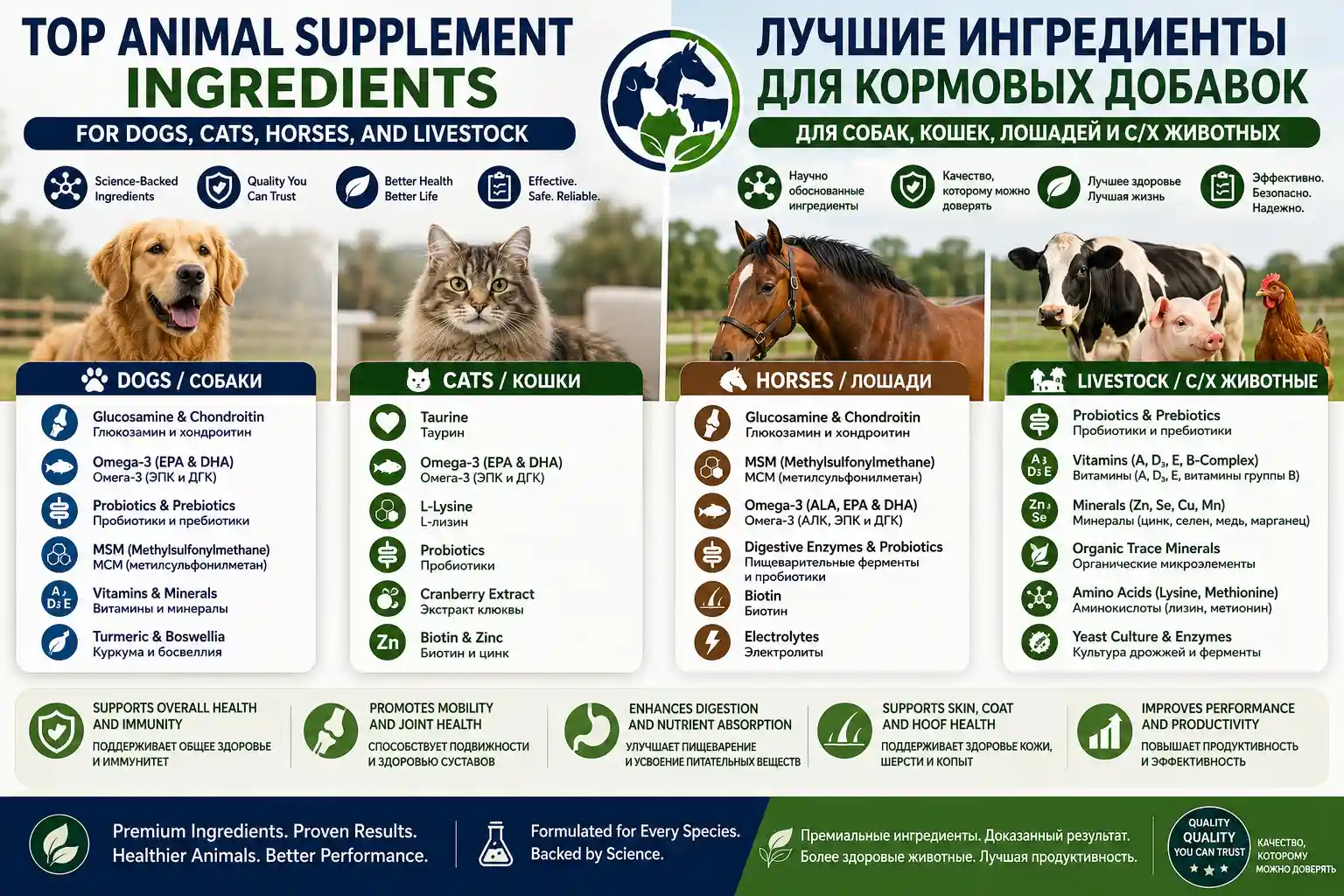
Choosing the right animals supplement ingredients is not about putting the longest possible list on a label. For brand buyers, wholesalers, and product developers, the real goal is to match each ingredient with the right animal species, function, dosage form, and use scenario. Dogs, cats, horses, and livestock do not share the same nutritional priorities. A formula that works commercially for a dog chew may not be practical for a horse powder or a livestock feed additive.
The category is growing because animal owners are paying closer attention to daily wellness and performance nutrition. Grand View Research estimated the global pet supplements market at about USD 2.76 billion in 2025 and projected it to reach USD 4.65 billion by 2033, with a 6.9% CAGR from 2026 to 2033. In the broader animal nutrition space, the animal feed additives market was estimated at USD 44.42 billion in 2025 and projected to reach USD 67.26 billion by 2033. These numbers show why ingredient strategy has become a serious B2B decision, not just a product label detail.
Why Ingredient Selection Matters in Animals Supplement Formulas
Ingredient selection affects product safety, palatability, function, cost, and repeat purchase. A well-designed animals supplement formula should have a clear purpose. Is it for joint mobility, digestion, skin and coat, calming, immune support, hoof health, electrolyte balance, or feed efficiency?
Buyers should avoid overloaded formulas that promise too many outcomes. More ingredients do not always mean better performance. In many cases, a focused formula with meaningful ingredient levels, stable raw materials, and clear feeding directions is more reliable than a complex blend that is difficult to explain or dose.
Key Ingredients for Dog Supplements: Joints, Digestion, Skin, and Calm Support
Dog supplements are often built around everyday concerns that pet owners can easily recognize. For joint support, common ingredients include glucosamine, chondroitin, MSM, collagen, green-lipped mussel, and omega-3 sources. These are often used in chews, tablets, powders, or soft chews for senior dogs or active breeds.
Digestive support formulas may include probiotics, prebiotics, digestive enzymes, pumpkin, yeast culture, or fiber sources. Skin and coat products often use fish oil, algae oil, biotin, zinc, vitamin E, or flaxseed. Calming formulas may include L-theanine, chamomile, casein peptides, tryptophan, or hemp seed ingredients, depending on the market and regulatory requirements.
For dogs, palatability is critical. A technically good formula will fail commercially if the dog refuses to eat it.
Important Supplement Ingredients for Cats and Their Unique Nutritional Needs
Cats require more careful formulation than dogs because they have distinct nutritional needs and feeding behaviors. Palatability can be difficult, and some ingredients that are acceptable for dogs may not be suitable for cats.
Common cat supplement directions include hairball support, urinary tract support, digestion, skin and coat, and immune wellness. Ingredients may include omega-3 oils, taurine, probiotics, cranberry, pumpkin, psyllium husk, biotin, zinc, and selected vitamins. However, dosage and safety margins should be reviewed carefully.
Cat products often perform better in powders, pastes, liquids, gels, or small chewable formats. Strong odors, large serving sizes, or hard tablets may reduce compliance. For private label buyers, cat formulas should be developed with species-specific caution rather than copied from dog products.
Common Horse Supplement Ingredients for Mobility, Hoof, Gut, and Electrolyte Support
Horse supplements are usually more performance- and maintenance-oriented. Mobility formulas often include glucosamine, chondroitin, MSM, hyaluronic acid, collagen, and omega-3 sources. Hoof support products may use biotin, methionine, zinc, copper, and amino acids.
Gut support formulas often include probiotics, yeast culture, prebiotics, enzymes, and buffering ingredients. Electrolyte products commonly use sodium, potassium, chloride, magnesium, and calcium sources to support hydration balance after sweating or transport.
Horse supplement formats are commonly powders, pellets, liquids, or pastes. The cost per serving matters because horses require larger daily quantities than pets. Buyers should evaluate not only ingredient quality, but also mixing behavior, dust control, aroma, and packaging durability.
Livestock Supplement Ingredients for Growth, Immunity, Digestion, and Feed Efficiency
Livestock supplements are typically judged by practicality, cost efficiency, and measurable feeding routines. Common ingredient categories include minerals, vitamins, amino acids, probiotics, enzymes, yeast products, organic acids, electrolytes, and plant extracts.
For cattle, poultry, goats, and swine, buyers often focus on digestion, immune support, growth performance, feed conversion, reproductive support, and stress periods such as transport or heat. Unlike pet supplements, livestock formulas must fit farm operations. They may be delivered through feed premixes, water-soluble powders, mineral blocks, liquids, or bulk feed additives.
In this segment, ingredient stability, uniform mixing, storage conditions, and cost per animal are especially important.
How to Match Ingredients with Animal Species, Life Stage, and Use Scenario
A reliable animals supplement strategy starts with three questions: Which animal is it for? What life stage is it for? What daily situation does it support?
A puppy, senior dog, pregnant mare, laying hen, dairy cow, and working horse all have different needs. Even within one species, life stage and activity level can change the formula direction. Senior pets may need joint or digestive support, while young animals may need growth-related nutrients. Performance horses may need electrolytes and mobility support, while livestock may need minerals and feed-efficiency support.
The same ingredient may also require different dosage logic across species. That is why copy-and-paste formulation is risky.
Safety, Dosage, and Palatability Factors Buyers Should Consider
Safety should come before marketing. Buyers should ask suppliers about intended species, recommended serving size, active ingredient levels, raw material quality, shelf life, and storage requirements. For export or private label projects, label language should avoid disease-treatment claims unless permitted in the target market.
Dosage must be realistic. If a product requires too many scoops, too many tablets, or an expensive daily serving, customers may not repurchase. Palatability also affects real-world use. Dogs may prefer soft chews, cats may accept powders or gels, horses may need low-dust powders, and livestock products must mix evenly in feed or water.
How Brands Can Build a Reliable Animals Supplement Ingredient Strategy
Brands should build formulas around clear functions, not ingredient trends alone. A practical starter line might include dog joint chews, cat digestive powder, horse electrolyte powder, and livestock mineral support. Each product should have a defined animal, clear benefit language, suitable dosage form, and reliable ingredient supply.
The best animals supplement ingredients are not always the most fashionable. They are the ones that match the species, support a real daily need, remain stable during production and storage, and can be explained honestly to buyers. For long-term brand growth, that balance is more valuable than a crowded label.
Data Sources
- Grand View Research, Pet Supplements Market Size, Share & Trends Report, 2025–2033.
- Grand View Research, Animal Feed Additives Market Size & Industry Report, 2025–2033.
Ready to start your private label pet supplement project? Contact WanZiBei Biotechnology to discuss your manufacturing requirements with our expert team.
Tags
Ready to manufacture your pet supplement?
Discuss your project with our expert team today.
Get a Quote