How Pet Health Supplements Brands Develop Custom Formulas for Dogs and Cats
Primary (≤160 chars):
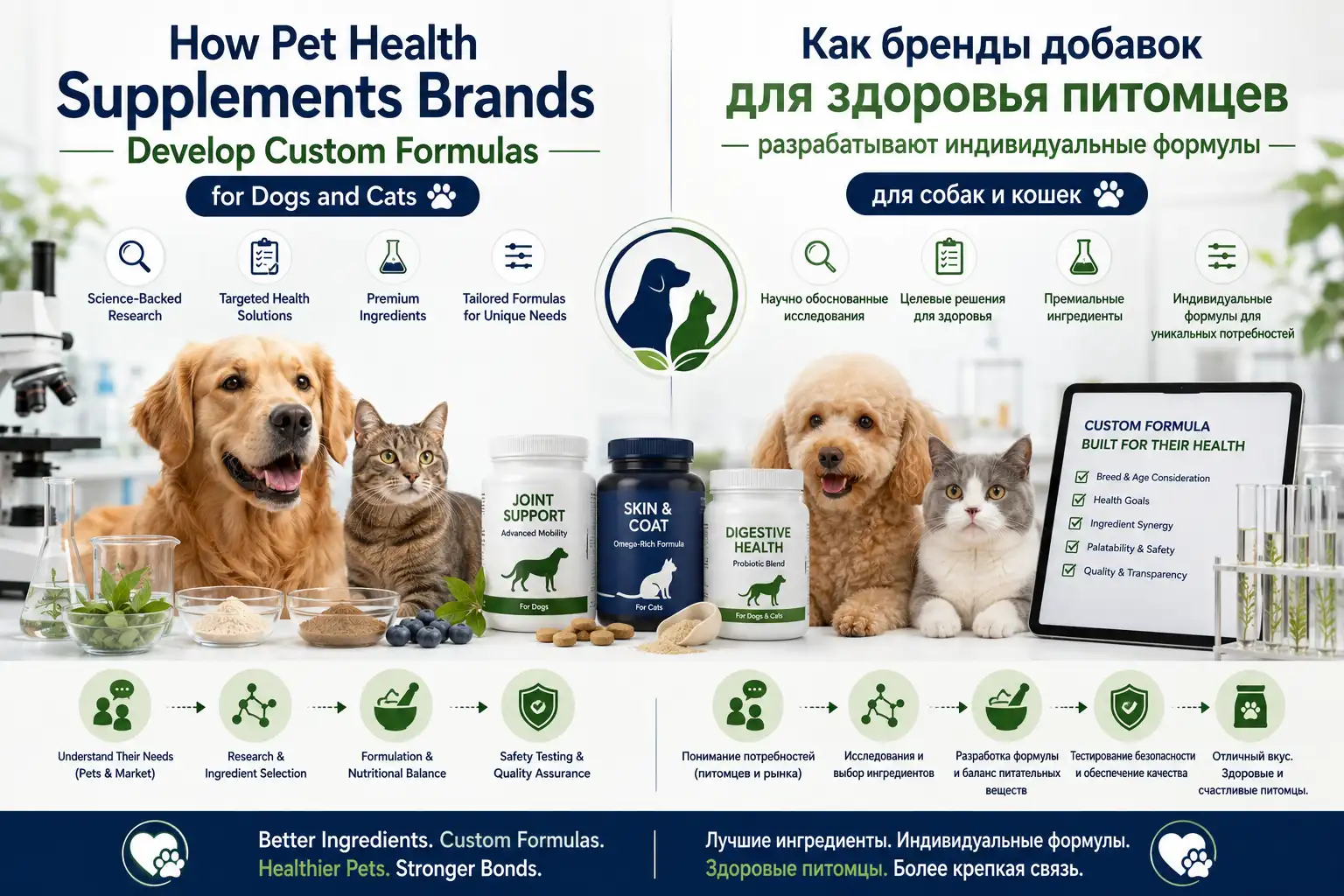
Developing a custom pet supplement formula isn’t like picking flavors off a menu. It’s a structured process that typically takes 3–6 months from concept to finished product, and skipping steps usually leads to reformulation costs down the line.
I’ve guided over a dozen brands through their first custom formulation, and the ones who succeed follow a repeatable process — not a rushed one.
Step 1: Define the Functional Target Before Talking Ingredients
The biggest mistake new brands make is jumping straight into ingredients. “We want a joint chew with glucosamine and turmeric” sounds specific, but it skips the most important question: what problem are you actually solving?
Custom formulation starts with a clear functional brief. For example:
- “A daily soft chew for senior dogs over 7 years old, targeting mobility and stiffness”
- “A powder formula for cats with recurring hairballs and digestive sensitivity”
- “A calming chews blend for dogs experiencing separation anxiety during work hours”
Each of these targets a different mechanism, different active levels, and different flavor profiles. A manufacturer can’t formulate effectively without this context.
Step 2: Ingredient Selection and Dose Optimization
Once the target is defined, the formulation team works on ingredient selection. This is where industry experience matters most.
For a typical dog joint support formula, the ingredient shortlist might include:
- Glucosamine HCl: 500–1,000 mg per serving
- MSM: 250–500 mg per serving
- UC-II collagen: 20–40 mg per serving
- Turmeric (95% curcuminoids): 100–200 mg per serving
- Vitamin E: 50–100 IU per serving
The dose range for each ingredient depends on the target weight range (small vs. large breeds), format (chew vs. powder affects absorption), and whether the formula is intended for daily maintenance or therapeutic support.
An experienced manufacturer will recommend dose-response adjustments based on bioavailability. For example, curcumin’s bioavailability in dogs is around 1–2% on its own, but adding black pepper extract (piperine) at 5 mg per serving can boost absorption by approximately 2,000% (Shoba et al., 1998, Journal of Ethnopharmacology). That kind of knowledge separates commodity manufacturing from真正的 custom formulation expertise.
Step 3: Format Selection Drives Everything
The formula format affects costs, stability, and compliance more than any other decision. Here’s how the three main options compare for custom formulas:
| Format | Custom Dev Time | Stability Shelf Life | Pet Acceptance |
|---|---|---|---|
| Powder | 3–6 weeks | 18–24 months | Moderate (needs mixing) |
| Soft chew | 8–14 weeks | 12–18 months | High (treat-like) |
| Liquid | 4–8 weeks | 9–15 months | Moderate (palatant-dependent) |
Soft chews have the longest development time because the texture is difficult to get right. Too hard and pets won’t eat them. Too soft and they don’t hold their shape during packaging. Most brands I’ve worked with go through 4–8 iterations before approving a soft chew texture.
Powders are faster to develop but require the pet owner to mix them into food, which creates a compliance challenge. Some studies suggest powder compliance drops to around 60% after two weeks as owners forget or get tired of mixing.
Step 4: Palatability Testing Is Non-Negotiable
A formula that pets won’t eat is worthless, no matter how good the ingredient list is. Professional custom formulation includes palatability trials — typically a two-bowl test where pets choose between the new formula and a control.
Acceptable palatability scores for commercial launch are:
- Dogs: 85%+ preference ratio
- Cats: 75%+ preference ratio (cats are more selective)
Natural flavor enhancers like chicken liver powder, salmon oil, and yeast extract are commonly used to improve acceptance without adding artificial flavors.
One brand I worked with spent $15,000 on a custom soft chew formula before testing palatability. When they finally ran a trial, only 40% of dogs accepted the chew. They had to reformulate from scratch — adding three months and significant cost to the project.
Step 5: Stability Testing and Shelf-Life Validation
Stability testing is the longest phase of custom formulation and the easiest to underestimate. Manufacturers place the finished product in accelerated stability chambers at 40°C/75% RH for 6 months to simulate 18–24 months of shelf life.
During this period, samples are tested at 0, 1, 3, and 6 months for:
- Active ingredient potency
- Microbial limits
- Moisture content
- Texture changes (for chews)
- Appearance and odor
A formula that looks great in the first month but degrades by month three needs reformulation. This is why rushing stability testing is a common and expensive mistake.
The Bottom Line
Custom pet supplement formulation is not a commodity service. The brands that succeed invest time upfront on the functional brief, choose their format based on real pet owner behavior, and budget for proper stability testing. A well-developed custom formula done right will perform in the market for years. A rushed one rarely survives the first production batch.
Ready to start your private label pet supplement project? Contact WanZiBei Biotechnology to discuss your manufacturing requirements with our expert team.
Tags
Ready to manufacture your pet supplement?
Discuss your project with our expert team today.
Get a Quote