White Labeling Pet Products vs. Private Labeling What Is the Difference
White Labeling Pet Products vs. Private Labeling: What Is the Difference? The global pet supplement market continues to expand rapidly as pet owners pay more attention to nutrition, joint health, d...
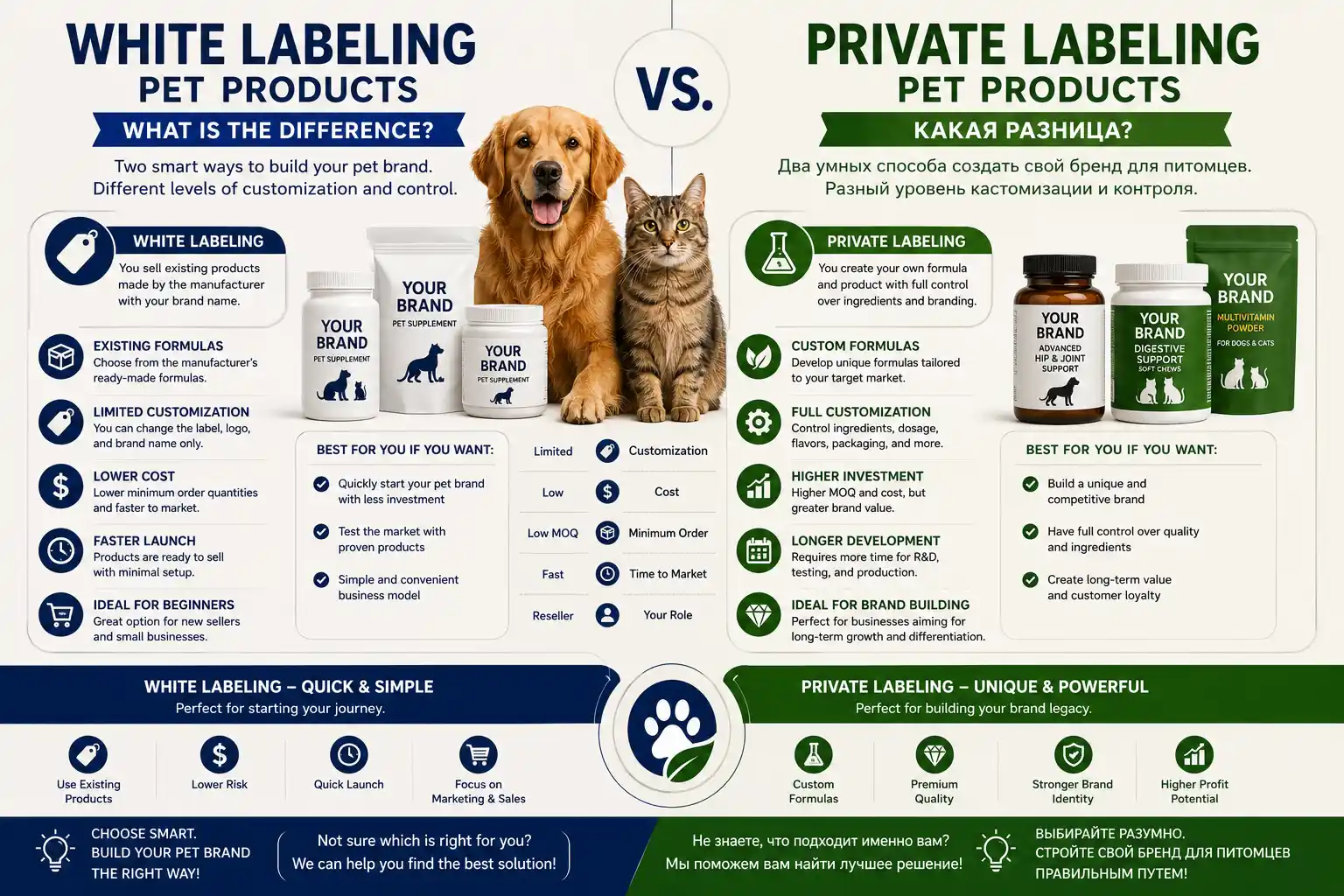
White Labeling Pet Products vs. Private Labeling: What Is the Difference? The global pet supplement market continues to expand rapidly as pet owners pay more attention to nutrition, joint health, digestion, skin support, and longevity for their animals. According to Grand View Research, the global pet supplements market was valued at over $2.5 billion in 2024 and is projected to maintain strong growth over the next several years. As competition increases, many emerging pet brands are turning to white labeling and private labeling to launch products faster and reduce manufacturing risks. Although these two business models are often confused, they are very different in terms of customization, cost structure, branding flexibility, and long-term strategy. What Is White Labeling in the Pet Supplement Industry? White labeling refers to selling pre-formulated pet products manufactured by a third-party factory under your own brand name. In this model, the manufacturer already has ready-made formulas, packaging formats, and production processes available. For example, a factory may already produce dog joint soft chews containing glucosamine, MSM, and chondroitin. A buyer simply adds their logo, chooses a label design, and launches the product under their brand. White labeling is popular among Amazon sellers, startups, and small distributors because it allows fast market entry with lower investment. Production timelines are usually shorter, and MOQs are often more flexible. What Is Private Labeling for Pet Products? Private labeling involves developing customized products specifically for one brand. Unlike white labeling, private label products are typically exclusive and may include unique ingredient combinations, customized dosage levels, proprietary flavors, specialized packaging, and differentiated branding strategies. For instance, a pet brand may request a calming soft chew formula containing L-Theanine, Ashwagandha, Chamomile, and probiotics with a duck flavor designed specifically for senior dogs. Private labeling requires more collaboration between the brand and manufacturer, including formulation testing, sample revisions, regulatory compliance, and packaging development. This model is commonly chosen by established brands that want stronger market differentiation and higher customer loyalty. Key Differences Between White Label and Private Label Pet Products The biggest difference lies in customization and exclusivity. White label products are standardized products sold to multiple brands. The formula itself remains unchanged, and only the branding is different. This approach reduces development costs and shortens production cycles. Private label products are customized for a single client. Brands can modify ingredients, dosage forms, flavors, shapes, active concentrations, and packaging design. In many cases, the formula becomes exclusive to that customer. Another major difference is speed. White labeling can often launch within a few weeks, while private labeling may require several months depending on formulation complexity and testing requirements. Which Option Offers More Customization and Brand Control? Private labeling offers significantly greater control over branding and product positioning. In today’s competitive pet supplement market, many successful brands focus heavily on differentiation. Customized formulas help companies create products targeting specific consumer concerns such as hip and joint support, allergy management, gut health, calming behavior, or immune support. Private label manufacturing also enables brands to align products with current trends such as grain-free formulas, functional mushrooms, clean-label ingredients, or veterinarian-formulated supplements. White labeling, however, is more limited. Since the formula is shared across multiple sellers, brands compete mainly through pricing, packaging, and marketing rather than product innovation. MOQ, Cost, and Production Time Comparison White label manufacturing generally requires lower MOQs and lower upfront costs. Some Chinese pet supplement manufacturers offer white label soft chews with MOQs starting at 500 to 1,000 bottles. Private label projects usually require higher MOQs because factories must purchase customized raw materials, produce specialized packaging, and conduct formulation trials. Initial development costs are also higher. However, private labeling often generates better long-term margins because exclusive products reduce direct competition. From a timeline perspective, white label products may reach the market within 2–4 weeks, while private label development can take 6–12 weeks or longer depending on complexity. Pros and Cons of White Labeling vs. Private Labeling White labeling is ideal for businesses seeking fast product launches with minimal investment. It reduces risk and simplifies operations, especially for new brands testing market demand. The downside is limited differentiation. Because many companies may sell nearly identical formulas, price competition can become intense. Private labeling offers stronger brand identity and higher product uniqueness. It allows businesses to build long-term customer loyalty and premium pricing strategies. However, it also requires more time, larger budgets, and closer collaboration with manufacturers. How to Choose the Right Manufacturing Model for Your Pet Brand The right choice depends on your business stage and long-term goals. If you are launching your first pet supplement product or testing Amazon demand, white labeling may be the most practical option. It allows quick market entry without large inventory risk. If your goal is to build a premium pet wellness brand with long-term differentiation, private labeling is usually the better strategy. Customized formulas and exclusive packaging help brands establish stronger positioning in an increasingly competitive market. Today, many pet supplement companies start with white label products and later transition into private label development as their sales volume and customer base grow. Why More Pet Brands Are Partnering With Chinese OEM Pet Supplement Manufacturers China has become one of the world’s leading production hubs for pet supplements due to its mature supply chain, ingredient sourcing advantages, and flexible manufacturing capabilities. Many Chinese OEM factories now provide full-service solutions including formula development, flavor customization, packaging design, compliance support, and global shipping. Compared with manufacturers in North America or Europe, production costs are often 20%–40% lower while maintaining competitive quality standards. For pet brands seeking scalable production and flexible customization, experienced Chinese manufacturers continue to play a major role in both white label and private label pet supplement markets.
Ready to start your private label pet supplement project? Contact WanZiBei Biotechnology to discuss your manufacturing requirements with our expert team.
Tags
Ready to manufacture your pet supplement?
Discuss your project with our expert team today.
Get a Quote